
Click here for Chinese New Year 2019: Year of the Dirty Pig
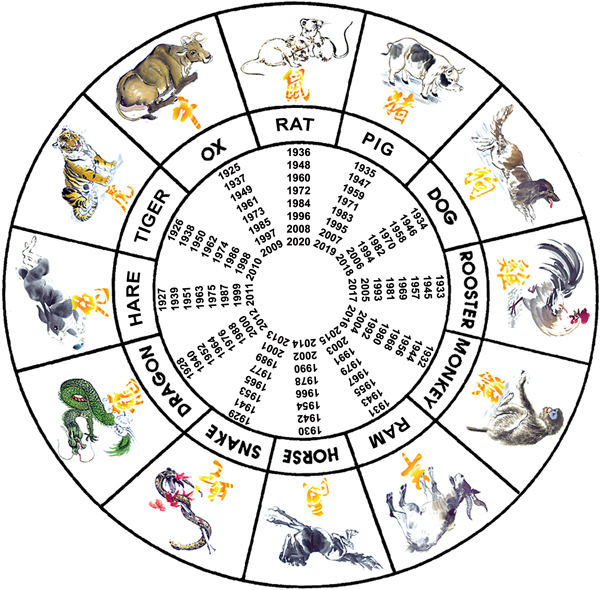 This started with a Flaming Cock. This is the 4th installment of my now annual KungFuMagazine Chinese New Year blogs, which officially began in 2017, the Year of the Flaming Cock. Between that installment and this one were two dirty pieces, Chinese New Year 2018: Year of the Dirty Dog and Chinese New Year 2019: Year of the Dirty Pig. Those were earth element years so dirty, and the cock was fire so flaming. I kind of wish this could be the Year of the Dirty Rat because that sounds cool. Unfortunately in the Chinese zodiac, elements roll over every two years which makes 2020 a metal year.
Prior to my flaming cock and dirty bits, I wrote on two other Chinese New Year blogs. I skipped 2016 (Year of the Fire Monkey), but prior to that I submitted Chinese New Year 2015: Year of the Ram (or Goat or Sheep or Ewe). That one really should’ve been a part of this series because it's written in the same style. If only I had the foresight back then, it could’ve been the Year of the Lumber Mutton or something like that (I have no idea how to spin the element of wood at this moment but I won’t have to worry about it until 2024). I also wrote a two-part blog for the last Year of the Dragon which had a very different tone. It was an ode to my past life as a Lion Dancer. Either one of those can be read first – I intentionally wrote it that way: Chinese New Year 2012 YEAR OF THE DRAGON: She Takes Her Fan and Throws it in the Lion's Den and Chinese New Year 2012 YEAR OF THE DRAGON: The Bees Made Honey in the Lion's Head. However, those preceded my elementally-spun blogs. These officially start with that Flaming Cock, and I’m okay with that because so many things might begin with a flaming cock, right? With a little luck, I hope to see this through until I complete the zodiac cycle of twelve back to that skipped Monkey. I can revisit the Ram and Dragon when they come around. The next Year of the Monkey will be 2028 and that will be a dirty monkey and I hope Kung Fu Tai Chi is still in print then. You can help with that by subscribing.
But back to the Iron Rat – note that these annual blogs are my martial insights on the nature of the zodiac beasts, not predictions. If you want to your Iron Rat forecast, check out Kung Fu Horoscopes by Master Wilson Sun.
I pondered over how to phrase the element this year. The Twelve Chinese Zodiac signs cycle across the five elements of Wood (mu 木), Fire (huo 火), Earth (tu 土), Metal (jin 金), and Water (shui 水) for a cycle of sixty (12 zodiacs x 5 elements = 60). "Metal" is only one translation for the character jin. The other two are "gold" and consequently "money." Most go for the "gold" when it comes to Chinese New Year because we always want the New Year to be prosperous, but that doesn’t quite fit with my dirty flaming theme. And "Money Rat" just sounds weird. I considered "Rusty Rat" for the alliteration but rust is the combination of Water and Metal, or more scientifically, Air and Metal, which is why we say "oxidizing." However, Air isn’t among the Chinese Five Elements (some believe that it’s supplanted by qi) and Metal collects Water in Five Element theory, so that just didn’t feel right either. Iron Rat sounds martial and martial is my go-to here at KungFuMagazine for obvious reasons. Plus, as you'll see later in this article, there’s a legend about Iron Rats worth recounting this year.
"Rat" is a tad ambiguous in translation too. The Chinese word is shu (鼠) which can mean "rat" or "mouse." In English, we make the distinction between rats and mice. Rats are larger than mice, with a blunter snout and proportionally smaller ears. Rats have scaly tails while mouse tails are usually covered with fine hair. There are more than 30 species of mice and some 56 known species of rats including the Sumatran bamboo rat, which almost gets up to nine pounds, the size of a house cat. And when it comes to specific English terms used for these species groups, it’s a "pack" of rats and a "nest" of mice.
All Chinese characters are pictograms and if you squint at this one long enough, you can see the whiskers, four legs and tail of the rat. Rats are sometimes referred to as laoshu (老鼠), literally "old rat" in a respectful way, the same way tigers are referred to as laohu (old tiger 老虎). Here’s a point of Mandarin pronunciation. It’s easy to mispronounce the word for teacher (laoshi 老師) as "old rat" and you really don’t want to do that to any of your teachers, especially not your Kung Fu teachers.
The Rat comes first in the Zodiac because of an ancient myth where the Rat cheated in a great race between all the zodiac animals. The Rat piggybacked on the Ox. This shows a fundamental difference between how rats are seen on either side of the Pacific. In Western culture, rats are seen as vermin; after all, they did carry the black plague and as we are entering this Year of the Rat, the newest 'yellow fever' has the world on edge with the sudden outbreak and spread of the Coronavirus. It is traditional to rejoin family for Chinese New Year so the holiday is the largest annual migration of humans on the planet. It's the worst time for a new lethal Chinese virus to emerge because millions of people are on the move with the potential to spread the disease dramatically. Nevertheless, the Chinese view rats differently, respecting them for their intelligence and shrewdness. This slyness is exemplified in that myth and why the Rat is first. Rats are also highly regarded for their vitality because they multiply so quickly. Rats can reproduce every three weeks and rat pups can start having their own pups within three to four months after they’re born. In Darwinian terms, the net reproductive success of rats is undeniable. Until the Chicoms enforced its One-Child Policy, Chinese culture considered many children as a blessing. The veneration of propagation exists in every culture with high child mortality rates. Additionally, rats are also connected to prosperity and the acquisition of fortune. Think of pack rats – they got a lot of stuff. There’s also an ancient Chinese belief that rats turn into quails in the spring and then back into rats during the eighth lunar period. I have no idea why this is – it's just something I read once and it was so random that I just needed to include it here.
The Rat, like the Ox, Hare, Ram, and Pig, is not represented by a traditional style of Kung Fu like say Tiger style, Dragon style, or even Doggy style. There may be some obscure Rat folk style somewhere in the vast countryside of China. Kung Fu is riddled with those. I’ve even heard tell of a "flea" style but I’ve yet to hear of Rat style. That’s somewhat surprising given the aforementioned Chinese regard for rats, as well as their vicious tenacity. Rats are tough. They can gnaw through metal, glass, lead, cinder blocks and aluminum sheeting. A rat can survive without water longer than a camel. Some rats can swim for over a mile, tread water for up to three days and hold their breath three minutes. Ever hear that old urban legend about rats climbing up your pipes and into your toilet bowl? That’s no legend. Sewer rats are very real.

Speaking of sewer rats, the most notable martial Rat in pop culture is Master Splinter from TEENAGE MUTANT NINJA TURTLES). Splinter is a master of Ninjitsu of course, and he is either the reincarnation of Ninja Master Hamato Yoshi (a character in the comics) or his pet rat, depending on which version of the TMNT franchise you follow.
Master Splinter’s roots, along with the roots of his teen turtle pupils, might be associated with ancient Asian legends. In Japanese culture, there is a mythical world of magical creatures, ghosts and demons called Yokai (妖怪). In Chinese, this is the yaoguai world and it translates into "supernatural and strange." After the box office success of MONSTER HUNT in 2015, a horde of yaoguai-based films emerged including three notable entries from last year, Jackie Chan's THE KNIGHT OF SHADOWS, China's entry for International Feature Film for the 2020 Academy Awards, NEZHA, and Louis Koo's KUNG FU MONSTER. But back in Japan, there are these Yokai called Kappa, which are strange aquatic creatures with turtle shells and beaks, and often associated with the Ninja Turtles. They are proud and stubborn, and fiercely loyal like the Ninja Turtles. Unlike the Ninja Turtles, they also possess three anuses, which allows them to fart with triple intensity.
 There is also a vengeful rat Yokai called Tesso (鉄鼠). Tesso literally means "Iron Rat" (told you I'd get back to this article's title). According to legend, a monk named Raigo prayed for the birth of Emperor Shirakawa with the promise that an ordination platform be constructed with imperial funding as his reward. But after Prince Atsufumi was born in 1074, that promise, just like so many political promises today, went unfulfilled. Raigo then prayed that the Prince would fall. Raigo was so committed to this act of vengeance that he fasted for 100 days and then died. But it worked. The Prince died soon after. However Raigo's wrath wasn't satisfied. He returned as a giant rat and destroyed Buddhist sutras stored at Enryaku-ji. Some legends say it was a pack of rats. Either way, the sutra-munching Yokai is named Tesso, or the Iron Rat.
There is one significant rat reference in the realm of Chinese Martial Arts and that’s a fundamental weapon, the Rat-tail Staff (shuwei gun 鼠尾棍). Rat-tail Staffs are so named because they are shaped like rat tails, thick on one end and tapering to a thinner pointy end. This is different that an Eyebrow-height Staff (qimei gun 齊眉棍), which generally has a uniform thickness for the entire length of its shaft, or a Tapered Bo Staff, which is thicker in the middle and symmetrically thinner on both ends. Tapered Bo Staffs are used in Japanese Martial Arts and seldom seen in the hands of Chinese practitioners. A symmetrical weapon like a Tapered Bo or an Eyebrow-height staff allows for more classical quarterstaff combat, which is to say it can be held in the middle so it can strike equally with either end. A Rat-tail Staff has such capabilities too; however, it is more advantageous to use it like a spear, jabbing with the pointy end to make the most use of its reach and speed. For anyone who practices Rat-tail staff, 2020 might be a lucky year to focus on it.

So there you have it – my martial Iron Rat trivia for 2020. Remember to get your Year of the Rat T-shirts and hoodies now. This year, they come in two styles: Rat Seal T-shirts and Hoodies and Golden Mice T-shirts and Hoodies.
Gung Hay Fat Choy! Gong Xi Fa Cai! 恭喜發財!
About author:
Subscribe to KungFuMagazine.com here.
Get your print edition of the MID-AUTUMN 2026 here.
Gene Ching is the Publisher of KungFuMagazine.com and the author of Shaolin Trips.


